Endocrine Disorders: Hormonal Cascade & Metabolic Axis
“Tracking the hormonal cascade through the HPA axis”
Evaluating the complex hormonal networks that regulate energy, metabolism, and mood. The endocrine system coordinates cellular metabolism, stress response, and energy expenditure through interconnected hormonal feedback loops. Reficio's 4-tier endocrine matrix profiles thyroid kinetics (FT3/FT4/TSH), glycemic and insulin resistance dynamics (Fasting Insulin, HbA1c), adrenal stress markers (Cortisol, DHEAS), and reproductive hormone balance.
The 4 Biological Axes of Endocrine Homeostasis
Comprehensive mapping across metabolic, stress, reproductive, and thyroid axes.
Reproductive Axis
LH, FSH, Estradiol, Progesterone
Stress & Advanced Inflammation
Cortisol, hs-CRP, DHEAS
Insulin & Metabolic
Fasting Insulin, HbA1c, Lipid Profile
Thyroid & Glucose
TSH, Free T3, Free T4, Glucose
Diagnostic Tiers & Pricing Structure
Tiered endocrine profiling from baseline thyroid/glucose to full reproductive and adrenal matrices.
Panel 1
- Baseline Thyroid (TSH)
- Fasting Glucose
- Basic Metabolic Baseline
Panel 2
Adds Metabolic layer
- Free T3 & Free T4
- Fasting Insulin & HbA1c
- Metabolic Profiling
Panel 3
Adds Stress/Advanced Inflammation
- Morning Cortisol
- DHEAS Stress Axis
- Advanced Inflammation
Panel 4
Adds Reproductive layer
- Full HPA Axis
- Reproductive Hormones
- Complete Metabolic Symphony
Endocrine Disorders
“Tracking the hormonal cascade through the HPA axis”
The endocrine system orchestrates metabolism, energy expenditure, and stress adaptation through feedback loops between the hypothalamus, pituitary, thyroid, adrenals, and gonads. Reficio’s matrix profiles hormonal kinetics across multiple interconnected glands.
Stage 1: Scientific & Biological Mechanisms
Sequential physiological and cellular decomposition from the canonical Reficio presentation
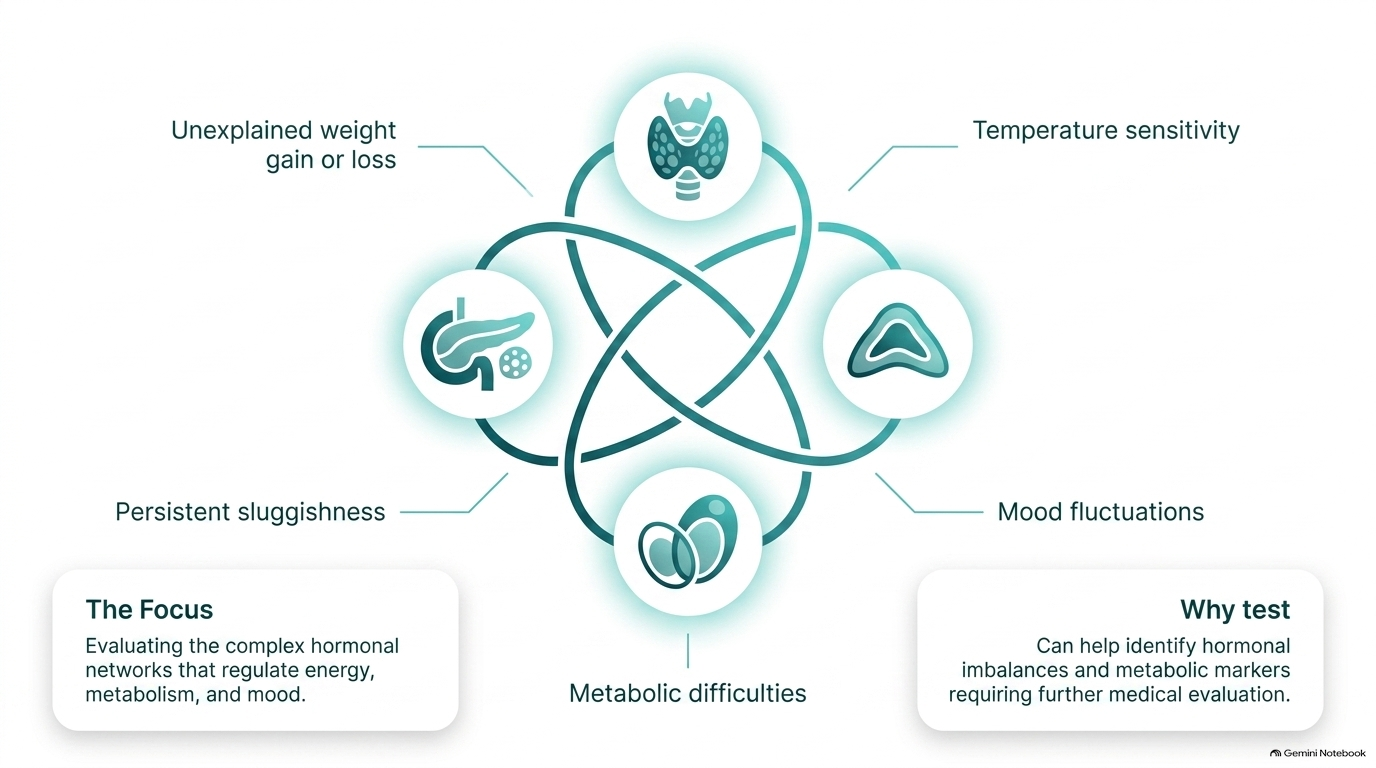
Endocrine Disorders Clinical Overview
Evaluating the complex hormonal networks regulating energy, metabolism, and vitality
Clinical Mechanisms & Biological Insights
- TSH alone can miss peripheral T4-to-T3 conversion deficiencies.
- Fasting insulin detects beta-cell hyperinsulinemia years prior to glycemic elevation.
Key Biomarkers Mapped in this Module
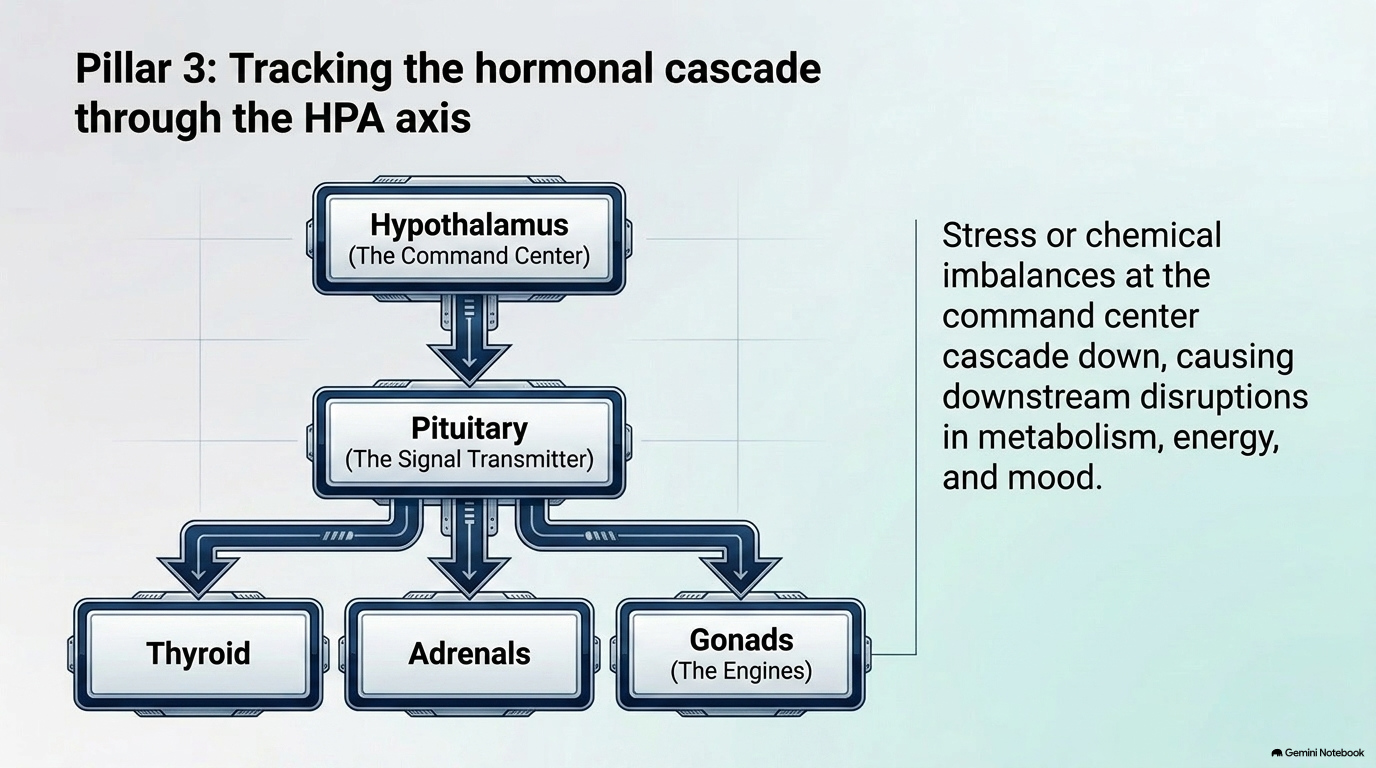
The Hormonal Cascade & HPA Stress Axis
The Command Center: From Hypothalamus and Pituitary to Peripheral Glands
Clinical Mechanisms & Biological Insights
- Cortisol follows a strict circadian rhythm, peaking 30-45 minutes after waking.
- Chronic HPA axis hyperactivity promotes central adiposity and insulin resistance.
Key Biomarkers Mapped in this Module
Core Diagnostic Biomarker Axes
Coordinated multi-pathway laboratory parameters evaluated across this biological pillar
TSH, Free T3, Free T4, Anti-TPO
Fasting Glucose, Fasting Insulin, HbA1c, HOMA-IR
Morning Cortisol (8 AM), DHEAS
Total Testosterone, Estradiol, Prolactin, LH, FSH
Associated Clinical Indicators
Common systemic presentations associated with this pillar:
Endocrine Disorders Diagnostic Architecture
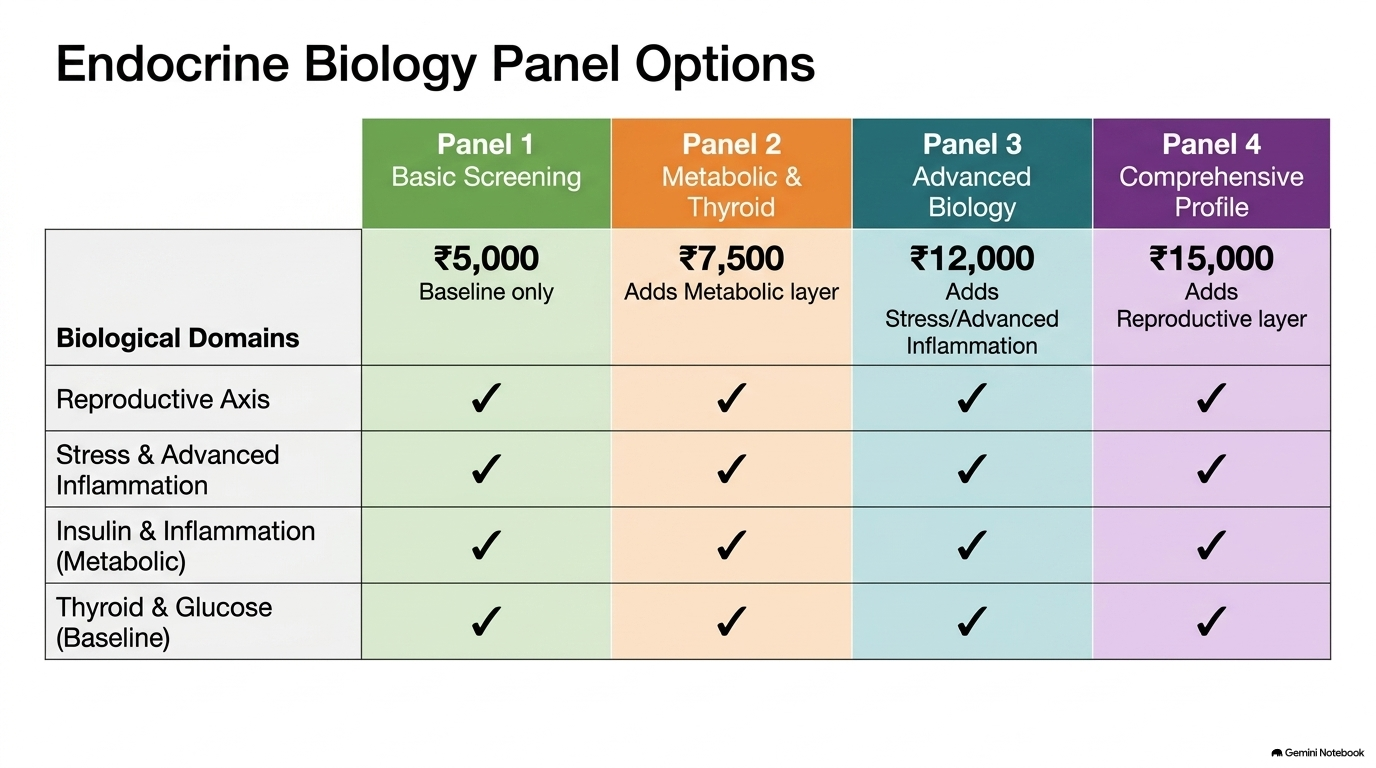
Key Included Biomarkers Across Tiers
- Tier 2 is essential for metabolic syndrome and insulin resistance profiling.
- Tier 4 maps complete adrenal-thyroid-gonadal harmony.
Frequently Asked Questions: Endocrine Testing
Practical guidance on hormone timing and sample collection.