Hair Fall Biology: Micronutrient, Hormonal & Follicular Workup
“Decoding hair fall as a systemic biological signal”
Investigating the biological, nutritional, and hormonal factors that influence hair health and follicle growth. Hair shedding and follicular miniaturization are sensitive barometers of internal systemic balance. Reficio's 4-tier hair biology matrix systematically investigates nutritional stores (Ferritin, Zinc, Vitamin D), endocrine regulators (TSH, Morning Cortisol), androgen pathways (Testosterone, DHEAS), and autoimmune markers (ANA).
The 4 Biological Axes of Follicular Health
Four physiological pillars essential for healthy anagen growth cycles.
Nutritional / Iron Status
Ferritin, Zinc, Vitamin D, Iron Studies, CBC
Thyroid & Stress
TSH, Cortisol
Hormonal / Androgen
Total Testosterone, DHEAS
Immune & Inflammatory
ANA, hs-CRP, ESR
Diagnostic Tiers & Pricing Structure
Progressive hair biology panels from basic micronutrients to comprehensive follicular blueprints.
Panel 1
- Iron Baseline
- Vitamin D
- CBC
Panel 2
Adds Iron Studies, Cortisol, hs-CRP
- Full Iron Studies
- Serum Zinc
- TSH & Cortisol
Panel 3
Adds Androgens, ANA, ESR
- Total Testosterone
- DHEAS
- Autoimmune Alopecia Markers
Panel 4
Full coverage; highest value for marginal step in price.
- Complete Follicular Blueprint
- All 4 Biological Domains
- Maximum Preventative Coverage
Hair Fall & Cellular Nutrition
“Decoding hair fall as a systemic biological signal”
Hair follicle matrix cells possess one of the highest mitotic turnover rates in human biology, making them exceptionally sensitive to micronutrient deficiencies, thyroid imbalances, androgen receptor sensitivity, and systemic stress.
Stage 1: Scientific & Biological Mechanisms
Sequential physiological and cellular decomposition from the canonical Reficio presentation
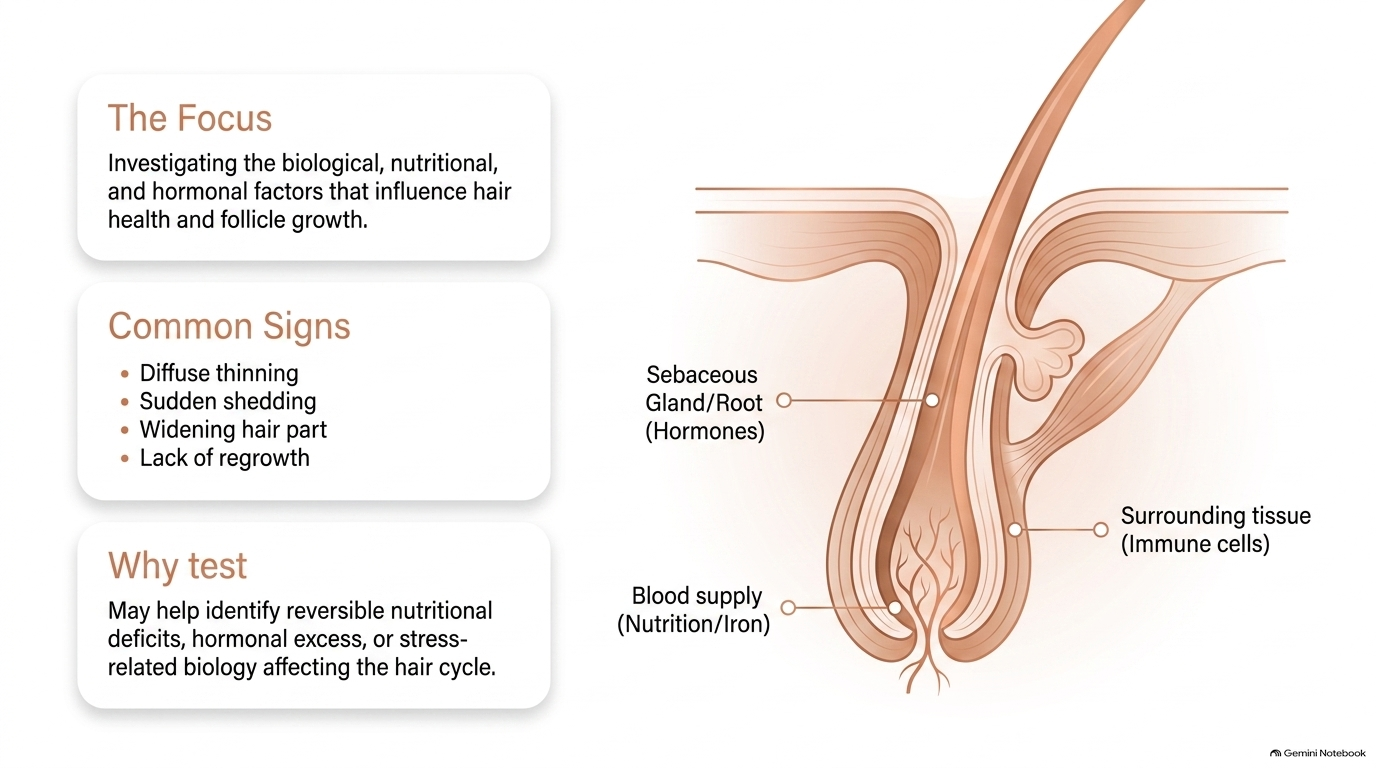
Hair Fall Biological Overview
Investigating biological, nutritional, and hormonal factors governing follicular growth
Clinical Mechanisms & Biological Insights
- Serum iron can appear normal while cellular ferritin stores are completely depleted.
- Ferritin levels > 50-70 ng/mL are clinically recognized as necessary for optimal hair regrowth.
Key Biomarkers Mapped in this Module
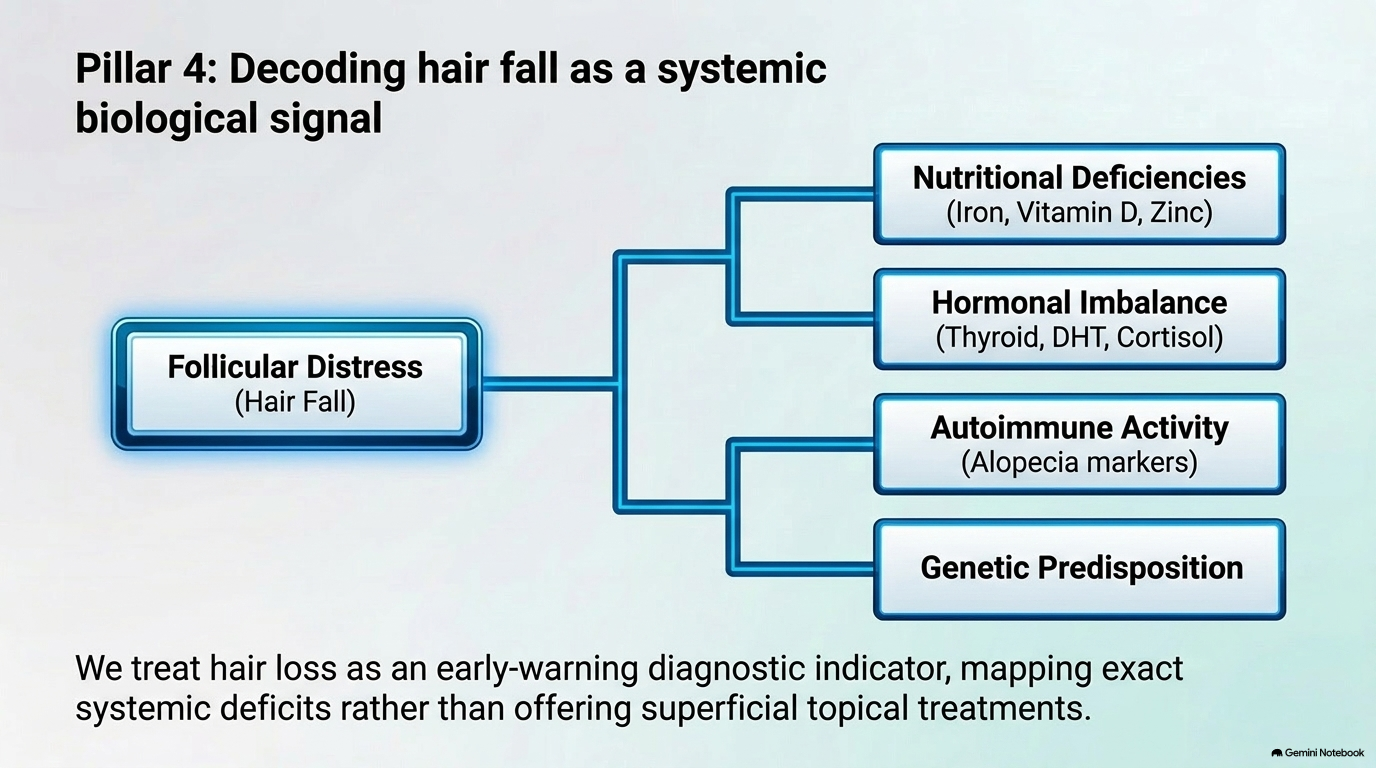
Follicular Cycling & Root Cause Biology
Mapping systemic deficits: Nutrition, Hormones, Autoimmunity, and Stress
Clinical Mechanisms & Biological Insights
- Elevated cortisol suppresses follicular proteoglycan synthesis.
- Androgens accelerate miniaturization in genetically susceptible follicles.
Key Biomarkers Mapped in this Module
Core Diagnostic Biomarker Axes
Coordinated multi-pathway laboratory parameters evaluated across this biological pillar
Serum Ferritin, Iron, TIBC, Transferrin Saturation, CBC
Zinc, Vitamin D (25-OH), Vitamin B12, Serum Copper
TSH, Free T3, Free T4, Morning Cortisol
Total Testosterone, Free Testosterone, DHEAS, ANA IFA
Associated Clinical Indicators
Common systemic presentations associated with this pillar:
Hair Fall Diagnostic Architecture
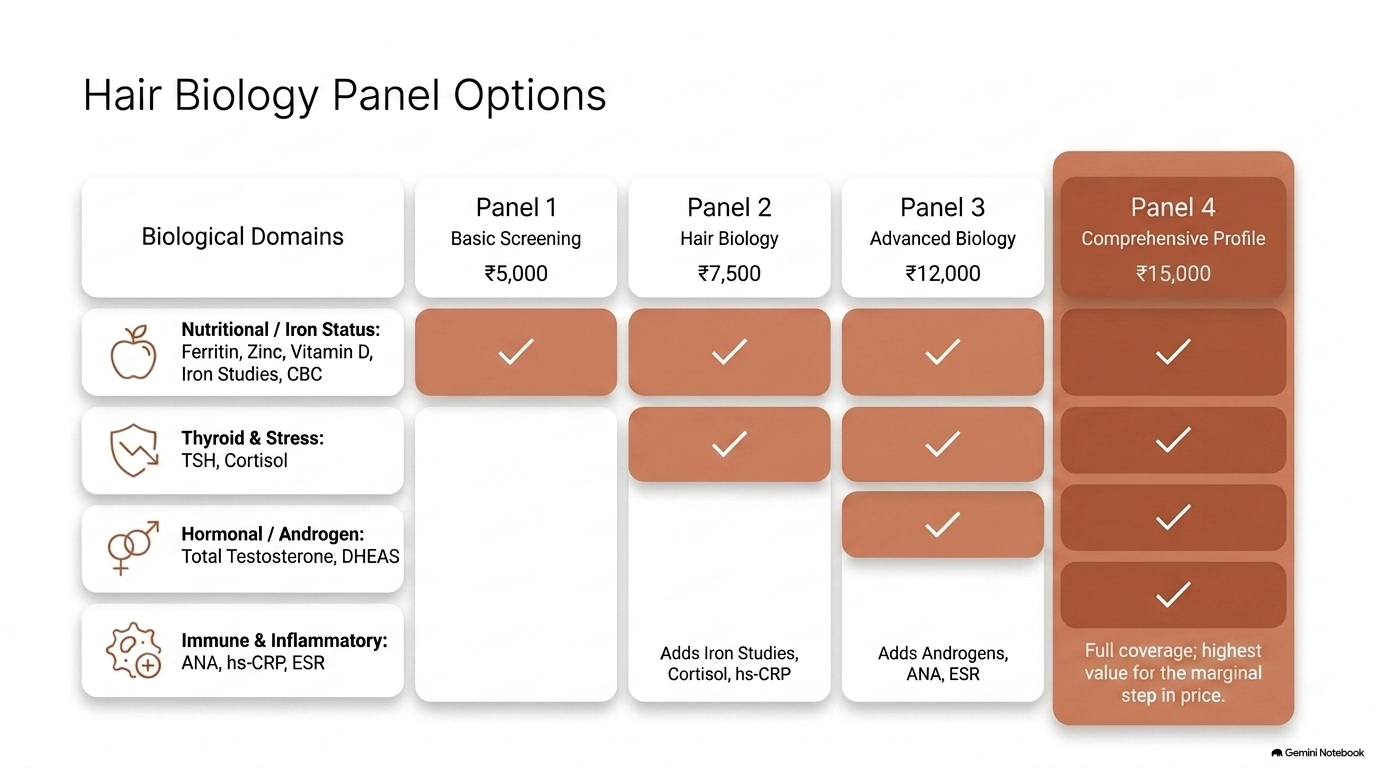
Key Included Biomarkers Across Tiers
- Tier 2 isolates nutritional and endocrine triggers for telogen effluvium.
- Tier 4 provides a complete trichology diagnostic blueprint.
Frequently Asked Questions: Hair Fall Biomarkers
Understanding the clinical evaluation of hair loss causes.